

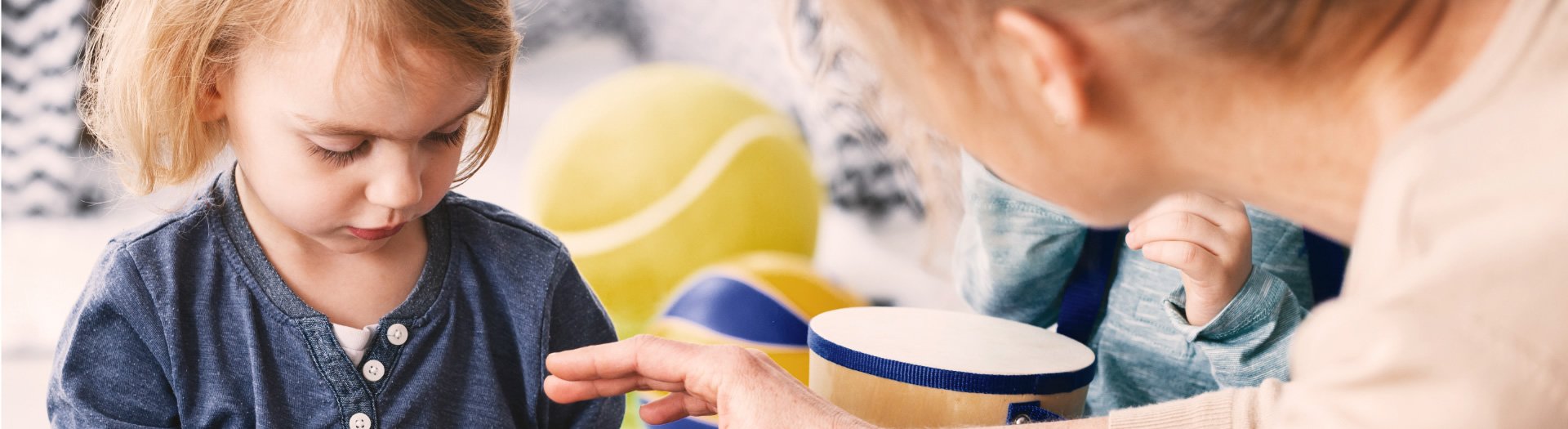
The Kindergarten Classes
École Bilingue Chardin receives children as young as 20 months old into its Toute Petite Section (TPS) of preschool, which is analogous to the final year of daycare.
Two preschool classes, each comprising approximately fifteen children, benefit from a spacious, well-lit, and welcoming environment, along with the attentive care of two early childhood professionals, one of whom is a native speaker of French and the other a native speaker of English. This ensures a student-to-teacher ratio that is conducive to personalized education.
The Montessori teaching method
For the present course, and for no other course, we have elected to derive our inspiration from Maria Montessori's pedagogical approach, as it is uniquely aligned with the developmental needs of children of this age, including the necessity for order, movement, language development, motor skills, and social connection.
Maria Montessori's pedagogical approach is characterized by her emphasis on self-reliance and independence in learning, encapsulated in her creed, "Help me to do it by myself." The bilingual teaching program (TPS) at École Bilingue Chardin is structured around three fundamental areas deemed essential for a child's development and autonomy.
Motor and sensory skills
From the age of two, children are considered to be in the initial stages of exploring the world around them. It is imperative that they are granted the freedom to move and explore their environment. At École Bilingue Chardin, all aspects of the educational environment are meticulously adapted to suit the physical dimensions of the students. It has been demonstrated that children will also satisfy their need for "maximum effort" and movement in the motor skills room. The capacity to exert maximum effort and to exhibit proficient motor skills are indispensable for optimal mental development. The child's ability to concentrate on physical tasks requiring effort will later facilitate their ability to focus on more intellectual tasks.
The utilization of Montessori materials fosters the development of fine motor skills in children. These materials encompass a wide range of activities, including puzzles, various shape insertions, opening and closing boxes with different mechanisms, gluing, cutting, and sewing. These materials have also been demonstrated to facilitate the development of children's concentration.
Furthermore, the stimulation of sensory development is a notable aspect of this method, encompassing the domains of hearing, sight, smell, touch, and taste. The children will be invited to engage in sorting activities that involve identifying and categorizing various sensory perceptions. These activities may include sorting identical sounds, arranging colors from lightest to darkest, identifying different fabrics with their eyes closed, and distinguishing between surfaces that are smooth or rough, among other exercises.
Practical life
Montessori's practical life materials enable children to emulate the actions of those around them in daily life. As Maria Montessori explains, "During this period, they imitate the acts of those around them, not because someone tells them to do so, but because of an inner necessity."
The pedagogical approach at École Bilingue Chardin entails the provision of opportunities for children to engage in activities similar to those observed in the adult world, including tasks such as "washing the table," "caring for plants," "pouring water into a glass," "cutting cucumbers," "using clothespins," and "washing windows." This facilitates the development of fine motor skills and overall coordination in children. Through the refinement of their movements through repetition, students will develop autonomy, self-confidence, and self-esteem—all of which are essential elements for the success of future learning.
Language
From the age of two, children undergo a period of rapid linguistic development, characterized by the seamless absorption of sounds and vocabulary. This phenomenon, known as the "language explosion," marks a significant turning point in their cognitive and linguistic growth. The Montessori educator and the English-speaking assistant will prioritize the use of rich and precise language in their communication with children, in addition to offering activities designed to enhance their vocabulary (classified images). On a daily basis, educators engage in reading activities that encompass books which portray authentic, concrete narratives.
Art
At École Bilingue Chardin, an emphasis on art in all its forms is also placed. In the domain of graphic arts, children are encouraged to utilize a range of media, including pencils, chalks, charcoal, markers, paint, and ink. Additionally, the use of clay facilitates the introduction of sculpting techniques.
The school provides musical instruments, sound books, and other educational materials for children. From a very young age, children can be introduced to a variety of performing arts, including opera, poetry, and dance.
Sports
A variety of sporting activities are available for young children, including baby yoga and motor skills development, overseen by professionals specializing in child psychomotricity and sports (see: Sports at École Bilingue Chardin). The curriculum will also incorporate designated periods of relaxation.
Toilet Training
At École Bilingue Chardin, children have access to toilets whenever they need them. The rhythm of each child is respected. They may or may not be toilet trained. Parents will be requested to provide "pull-up" diapers to facilitate the natural progression of the process. We endeavor to support children with benevolence and forbearance as they navigate this significant rite of passage into maturity.
The cafeteria
The bilingual Toute Petite Section is not merely a learning environment; it is also a socialization space. The child will be expected to learn to coexist with their peers. As students progress through the educational program, they will be instructed in the established norms of politeness and courtesy. Mealtime represents a moment of discovery, shared with the teachers (who consume the same meal as the children and sit with them at the table). The educators will methodically instruct the children in the proper etiquette during mealtime and assist them in identifying various flavors.
Naptime
It is imperative to allocate sufficient time for rest. It has been determined that children who remain at school for a period of rest will be provided with a personalized sleeping apparatus. Bedtime routines, such as the use of comforters or pacifiers, will be respected. The act of rising from slumber will occur in a staggered fashion throughout the duration of the afternoon.
The School Day
- The academic day at École Bilingue Chardin commences at 8:30 AM for the Toute Petite Section, with the school doors opening and welcoming the children.
- Morning: Each morning, a variety of activities are made available to children.
- Recess: Subsequent to the designated meal period, the children are allotted 40 minutes at Trocadero Square, a mere five-minute walk from their educational institution, for the purpose of expending energy and socializing with peers.
- Lunch :The designated time for the consumption of food is as follows: The designated time for the shared meal is 11:15.
- Nap Time: Beginning at 12:00 p.m., students who remain on the school premises are permitted to take a nap or engage in restorative repose. Children enrolled in the half-day program will be reunited with their parents or caregivers.
- Afternoon: Commencing at 2:00 p.m., children who awaken will engage in artistic or sports activities.
- End of the Day Together: At 4:15 p.m., the school day concludes, and students are to reunite with their parents or guardians.
- The provision of after-school care and extracurricular activities is a subject of interest in this study. The provision of childcare services is available until 6:00 p.m. at the educational institution.
On Wednesdays, the following events are scheduled: On Wednesdays, educational institutions observe a morning-only schedule. The designated conclusion of the instructional period is 11:15 a.m. The institution provides supervision and nourishment for students on Wednesday afternoons. The school is responsible for the provision of meals. Recreational activities such as nap time and workshops are scheduled to take place until 4:30 PM or 5:30 PM.
2-year-old Section
Bilingual learning from 2 years old with the Montessori pedagogy (only for the little section).
read more
Preschool
A blend of classical and innovative teaching methods for a bilingual education with an emphasis on mathematics, language, art, and sports.
read more

Elementary School
Bilingual learning with a strong emphasis on mathematics, and practicing art and sports on a daily basis.
read more