

Preschool
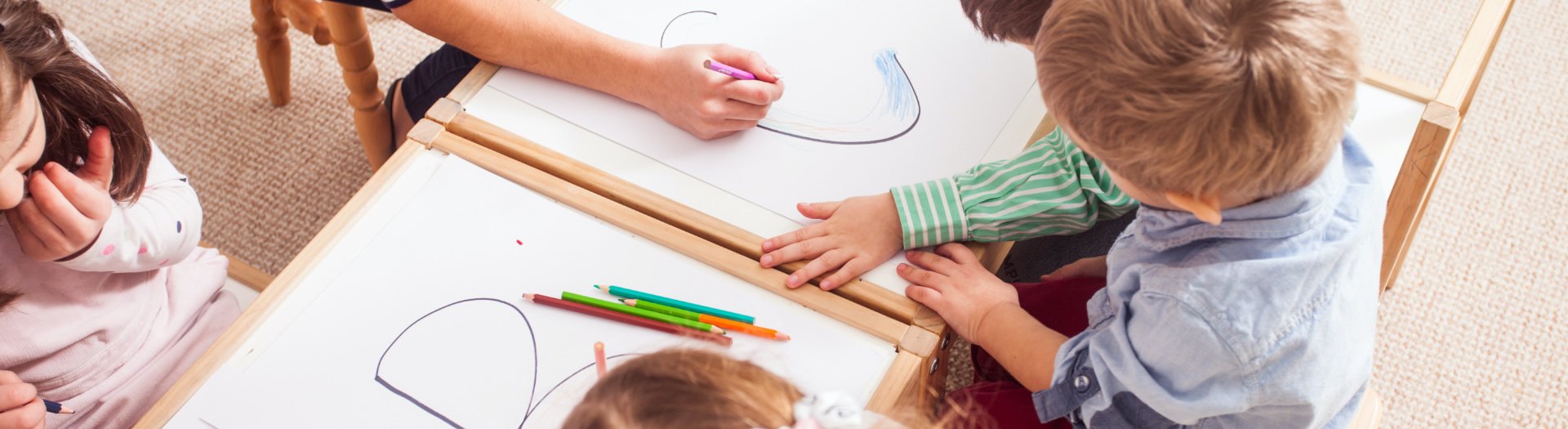
The bilingual preschool classes have a maximum enrollment of 20 children aged 3 to 6 years old. These classes are situated in a privileged setting in the heart of Paris, and they provide a tailored education.
France boasts a highly regarded tradition in early childhood education, with its conventional educational systems having incorporated numerous pedagogical advancements, garnering international recognition. At École Bilingue Chardin, we embrace this quality, but we go further to offer your children an exceptional environment for these crucial years. In this environment, children explore and discover the world, and build the foundations for a successful future education.
The cultivation of bilingual proficiency and a receptivity to global perspectives will equip children with the capacity to adeptly navigate educational systems. The staff members at our bilingual preschool have been observed to provide a nurturing environment, characterized by kindness and encouragement. This approach has been found to foster the development of children's confidence, creativity, and knowledge, all within a tranquil atmosphere. At École Bilingue Chardin, a dual-language preschool, there is a consistent staffing pattern of two teachers in each class: one who is proficient in French and one who is proficient in English. They collaborate either collectively or in smaller groups to motivate children to engage in language training beyond their native language.
At École Bilingue Chardin, there is no uniform policy in place. However, the school provides the following items for all children at the start of the year:
- Sportswear for physical activities
- An apron for artistic activities
- Clothing for outdoor activities
Preschool Pedagogy
The Petite Section, Moyenne Section, and Grande Section of our bilingual preschool are overseen by experienced teachers who have undergone specialized training at École Bilingue Chardin in innovative pedagogical methods. It is evident that the quality of children's education is ensured not only through adherence to the National Education's core curriculum, but also through supplementary initiatives.
- The program is characterized by its full-day bilingual immersion, with a faculty of both Francophone and Anglophone instructors in each class. This pedagogical approach ensures that students have access to both English and French throughout their educational experience. Half-group sessions have been meticulously organized to ensure that children do not communicate solely with the speaker of their native language.
- The acquisition of mathematical competencies is enhanced by the utilization of concrete representations, employing established methodologies.
- The objective is twofold: first, to enhance the vocabulary in both languages, and second, to focus on quality speech.
- It is imperative to note that, in accordance with our institutional mission, we place significant emphasis on the arts (e.g., painting, sculpture, crafts, music) and sports (e.g., motor skills, dance, yoga). The institution's team is supported by instructors specializing in these disciplines.
In our bilingual preschool classes, we establish the foundations for a successful primary school education.
Creativity, personal development, and a willingness to engage with others are fundamental to our approach to child education, alongside the acquisition of fundamental skills.
The cafeteria
Our bilingual preschool is also a place of sociability. The child will be expected to learn to coexist with their peers. As the child progresses through the developmental stages, the principles of politeness and courtesy will be naturally incorporated into the learning environment.
Mealtime is a moment of sharing and discovery, enjoyed with the teachers (who consume the same meal as the children and take their place at the table). A variety of menus, predominantly composed of locally sourced and organic products, are delivered fresh daily and served in the school cafeteria. The pedagogues meticulously and compassionately instruct the children in the etiquette of mealtime and the exploration of diverse flavors.
Naptime
It is imperative to allocate sufficient time for rest. The implementation of a program that allows children to take naps at school will be accompanied by the provision of personalized beds for these students. It is acknowledged that certain sleep habits, including the utilization of blankets or pacifiers, will be respected. The wake-up time is staggered in the afternoon.
Children who do not partake in the designated nap period will be invited to engage in a designated "quiet time." This may take the form of lying on a mattress, reading a book independently, or listening to stories.
Toilet Training
Preschool-aged children have access to restroom facilities as needed. The pedagogical approach is characterized by a deep respect for the developmental rhythm of children. It is important to note that children may not have been successfully toilet trained by the time they begin preschool. In such cases, if applicable, parents are requested to provide "pull-up" diapers, thereby facilitating the transition to toilet training. We endeavor to guide the children with benevolence toward this maturation.
The school doors are open from 8:40 to 8:50 for the purpose of welcoming children in the Petite, Moyenne, and Grande Sections.
The School Day
- Morning: In the educational setting, children collaborate with their instructors to develop their competencies in mathematics, language arts, and geography.
- Recess: Subsequent to the designated meal period, the children are allotted 40 minutes at Trocadero Square, a mere five-minute walk from their educational institution, for the purpose of expending energy and socializing with peers.
- Nutritional content: At 12:00, the designated time for shared meals, the subjects were observed partaking in a communal dining experience.
- Nap: At 12:45, students who remain at school are invited to take a nap or engage in quiet activities.
- Afternoon: Beginning at 2:00 p.m., children who have awakened are invited to partake in artistic and athletic endeavors within the designated sports room or in the classroom. These activities may be pursued either in a group setting or independently.
- End of the Day Together: At 4:20 p.m., the academic day concludes, and students are escorted to the designated collection point by their parents or guardians.
- The provision of after-school care and extracurricular activities is a subject of interest in this study. The provision of childcare services is available until 6:00 p.m. at the educational institution.
- On Wednesdays, Academic instruction is provided exclusively during the morning hours, with the final class of the day concluding at 11:20.
- An after-school care program is organized on Wednesday afternoons. Lunch is provided by the school, followed by nap time and workshops until 16:30 or 17:30.
2-year-old Section
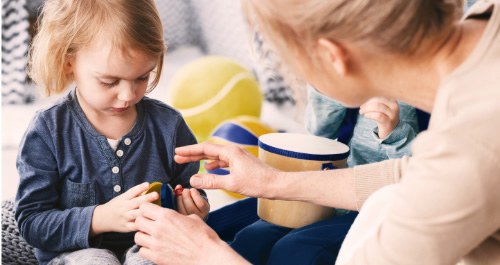
Bilingual learning from 2 years old with the Montessori pedagogy (only for the little section).
read more
Preschool
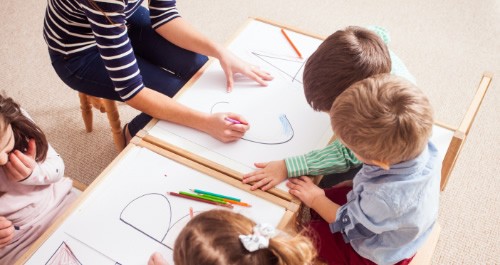
A blend of classical and innovative teaching methods for a bilingual education with an emphasis on mathematics, language, art, and sports.
read more
Elementary School
Bilingual learning with a strong emphasis on mathematics, and practicing art and sports on a daily basis.
read more